Ling Feng (凌峰)
凌峰
Líng Fēng · Rising toward a peak
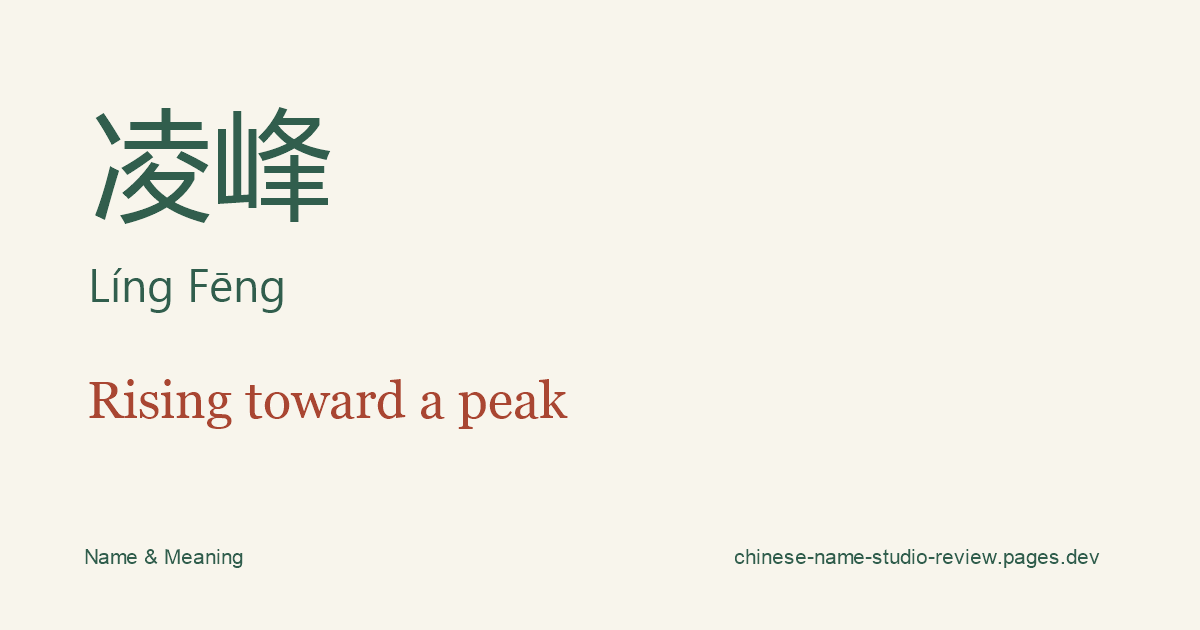
A rising action is paired with a mountain peak. This is one interpretation of a proposed name, not an official translation of an English name.
Look more closely at each character
凌 is read líng and can mean to rise above. Rising above can sound forceful; read the complete name for balance before choosing it. This is the first given-name character, so it establishes the image before the next syllable changes it.
峰 is read fēng and can mean mountain peak. A summit marks the high point of a mountain, which may give a name a more ambitious edge. It finishes the given name, but the dictionary gloss is only one layer: its sound and written form must work with 凌 and the family name.
Why this particular pair is worth comparing
凌 rises; 峰 names the summit it approaches. The image is directional and ambitious, but it should not be read as a prophecy of success. Its harder consonants may make the full-name rhythm especially worth checking.
Our short interpretation, “Rising toward a peak,” describes the pair as a whole. It is not a literal two-word translation. If you tell someone only the romanized spelling, they may picture different characters with the same sound. Show the writing alongside the pinyin when asking for feedback.
Pronunciation and full-name rhythm
Say the two syllables in order, líng followed by fēng, keeping both tone marks. English speakers often flatten the tones or stress the first syllable as if it were an English word. Mandarin name rhythm is different: try the given name alone, then place a family name before it. Listen for a smooth transition across all three syllables rather than judging the two-character pair in isolation.
Family names and the full sound
For comparison, try 马凌峰 (Mǎ Líng Fēng); 曹凌峰 (Cáo Líng Fēng); 薛凌峰 (Xuē Líng Fēng). These are spelling and rhythm examples, not claims that every combination is common or free of slang associations. A local Mandarin speaker may hear a near-homophone that a dictionary or automated filter misses.
Two more written examples are 萧凌峰 (Xiāo Líng Fēng); 卢凌峰 (Lú Líng Fēng). Compare the sound of the whole name with each surname; these examples are not a claim that every combination is culturally suitable.
Compare three nearby ideas
知远 suggests thoughtful vision; 安宁 suggests peaceful and steady; 亦舟 suggests a journey of your own. The overlap is thematic, but each pair changes the written image and the spoken cadence. Reading the alternatives next to 凌峰 helps you decide whether you want a more concrete scene, a gentler feeling or a stronger statement. A related name is not a drop-in replacement just because its English gloss sounds similar.
Two further comparisons are 景和 (Jǐng Hé) and 若溪 (Ruò Xī). Their written meanings and spoken rhythms still need separate review.
Questions to ask before using it
How do I check pronunciation and fit?
Ask a Mandarin speaker to read the full written name without first hearing your English explanation. Do they pronounce it as expected? Does it sound like an ordinary personal name for your age and setting? Does a particular family name create an awkward echo, slang phrase or strongly old-fashioned impression? Ask more than one person if the name will be part of a public identity, tattoo or permanent record.
Is this an official translation or legal name?
You can use this suggestion socially after discussing it with people you trust. Legal documents follow the rules where you live, and this website cannot assign an official Chinese translation to your English name. Save the exact characters and tone-marked pinyin together so that later readers know which name you chose. The full Chinese name directory offers other written options if this one does not feel right.