How to write my name in Chinese
First decide which Chinese characters you want to use. Pinyin such as Lín Zhī Yuǎn tells you how a name is pronounced; the written Chinese name is 林知远. Pinyin is a reading guide, not a substitute for the characters on a name card.
1. Put the family name first
In the example, 林知远 uses 林 as the family name and 知远 is the given name. Copy the characters in that order: 林 · 知 · 远. Keep all characters at a similar visual size rather than treating the surname as an English middle initial.
2. Keep the tone marks when writing pinyin
Write Lín Zhī Yuǎn alongside the characters while learning to say the name. The marks over í, ī and ǎ distinguish the tones; leaving them out makes the reading less precise. The marks belong over the vowel, not after the syllable.
3. Practice the character shapes
Use a square grid and copy each character from a reliable dictionary that shows its individual strokes. Do not infer stroke order from the finished picture alone. Compare your result with the printed form, then ask a Mandarin-speaking reader to check both the writing and the complete name.
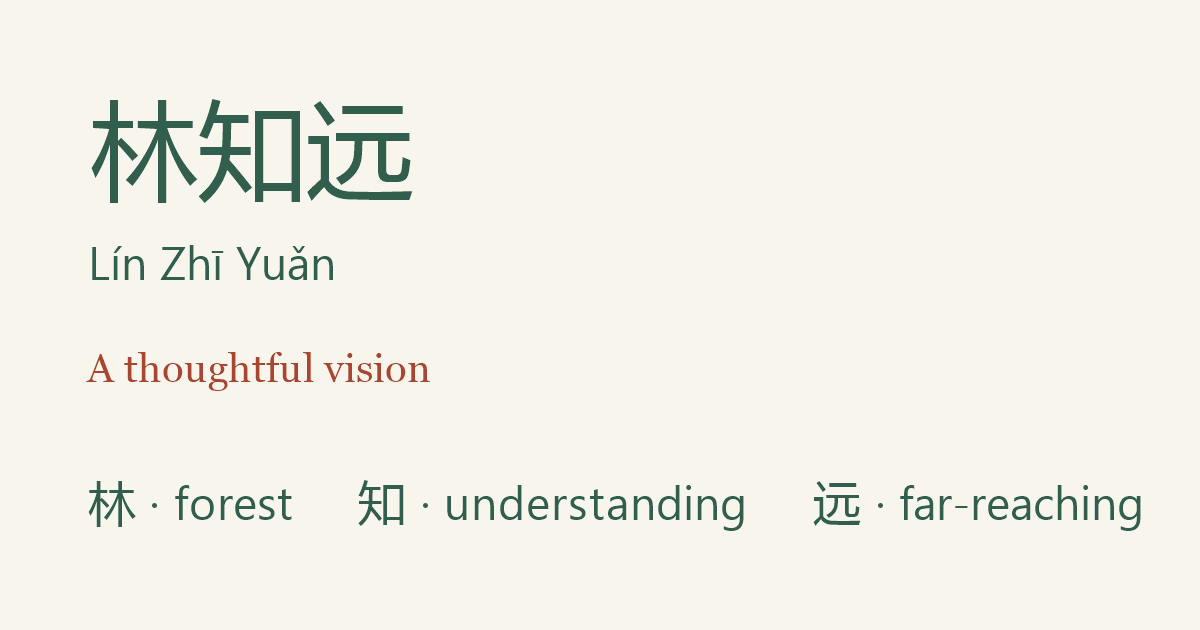
When you choose your own result, the Copy button copies the Chinese characters and pinyin; Save card downloads a visual reference. Neither changes your legal identity.
A quick written-name checklist
Keep the surname before the given name. Copy the exact chosen characters, including their component shapes, from a reliable dictionary rather than guessing from a small image. Write pinyin with its tone marks separately as a pronunciation aid. If a form asks for a legal name, do not substitute a creative suggestion without checking the form's requirements.
Common writing questions
Can I write only the pinyin?
Pinyin is helpful for reading, but it does not identify which Chinese characters you chose. Include the characters when introducing your selected name.
Are simplified and traditional characters interchangeable?
They are related writing systems, but the shapes can differ. Choose the form appropriate to the setting and check each character in a dictionary.
Where can I learn stroke order?
Use a reputable character dictionary with stroke animations or numbered diagrams. This guide does not claim that a static card teaches the stroke sequence.
From a saved card to your own handwriting
Copy the chosen characters one at a time into a square practice grid. Leave space around each character and compare the finished shape with a reliable dictionary entry. The generator's image is a reference for the result, while the dictionary should be your reference for individual stroke order. A character assembled from the wrong components can become another character entirely.
Keep a small note with three lines: the full Chinese characters, the tone-marked pinyin, and your plain-English explanation. For 林知远, those lines might be “林知远,” “Lín Zhī Yuǎn,” and “a surname followed by a given name suggesting understanding and a long view.” This helps another reader distinguish the written name from a pronunciation guide. If you want a traditional-character form, verify each character separately rather than assuming every simplified shape stays the same.
Before printing a card, making a tattoo or filling an official form, have someone check the exact characters at full size. A document may require a registered legal name regardless of the creative name you use socially.